
Blog · Industry trends
Wealth transfer: what the wave of successions changes for a wealth management firm.
A large share of French household wealth will change hands over the next fifteen years. For a firm, the question isn't the total amount. It's whether its clients' heirs will be able to find it, and what it will have done so they know who it is.
By Théo Riondet, founder of WebScale · November 18, 2026 · 6 min read
In short
Wealth transfer in France will involve between €5,100 and €7,558 billion by 2040, according to the Conseil supérieur du notariat, the national body of French notaries, with a median estimate of €6,200 billion. For a wealth management firm, what's at stake is the relationship: an heir doesn't always know their parents' advisor, and will choose who to work with after a few searches. A firm that has never met them can lose the client at the succession.
01
A number on a whole new scale.
The “great wealth transfer” refers to the gradual passing of baby-boom generations' wealth to their heirs. According to the Conseil supérieur du notariat (CSN), the national body of French notaries, between €5,100 and €7,558 billion could pass to the next generation in France by 2040. Its median estimate is around €6,200 billion for the 2025-2040 period.
This amount is a potential volume of wealth transferred, not a sum paid to each person or subject to inheritance tax: the CSN notes that more than 60% of the estates handled by notaries involve no tax payment. Other estimates go higher: the Fondation Jean-Jaurès put the figure at more than €9,000 billion at the end of 2024. The gap comes down to what each one counts (assets at death, gifts, life insurance). For our purposes, the range is enough: the movement is massive, and it is already under way.
The driver is demographic. Insee, the French national statistics institute, projects 727,610 deaths in 2040, compared with 622,548 in 2026, or 16.9% more (727,610 ÷ 622,548 = 1.169). Every year, more estates change hands.
And inheritance already weighs on household wealth: according to Insee's 2023-2024 Life History and Wealth survey, published in April 2026, 41% of households had already received an inheritance by early 2024.
02
What changes for a firm.
A firm doesn't experience this wave as a stream of new clients. It experiences it as a risk of breaking the relationships it already has. Three things change.
The mechanism
The firm knows the client. Not their children. At death, the wealth passes to people the advisor has sometimes never met, who have no reason to trust them by default, and who make their decision after a few days of research.
- The heir doesn't know the advisor. They discover a file, the name of a firm, sometimes a life insurance policy. They look around: the notary recommends someone, so does someone close to them, and they type the firm's name into a search engine. What they find there decides the first contact.
- The needs change. An heir often has a different age, a different project and a different attitude to risk than the original client. Taking over the parent's allocation isn't enough: it's a new relationship, with a new assessment.
- Time is short. Between the death and the first decisions, the window is narrow. A firm that has no name, no face and no clear way in for the heir is ruled out without ever knowing it.
The CSN also reports that 54% of the notaries surveyed in April 2026 believe that paying for long-term care already affects how their clients manage their wealth (survey of 2,200 notaries). The moment an elderly client prepares their estate is therefore often a moment when the firm can, and should, meet the next generation.
03
Where the firm loses the rest of the relationship.
A loss at the succession doesn't show up in an inquiry spreadsheet: no one wrote to the firm, and no one officially left it. The file closes, and that's it. The breaking points are always the same.
| Breaking point | What happens | What the firm doesn't see |
|---|---|---|
| The children aren't in the database | Only the client has a record. Their children don't exist in the tool. | No one can contact them or invite them. |
| The website doesn't speak to them | It addresses an investor who already knows the ropes. | The heir searches, finds no answer for their situation, and calls someone else. |
| No space for them | No client portal, no document to share. | The file lives only in the advisor's head. |
| No inquiry handling when they arrive | A standard form, an inbox, a message that goes nowhere. | An heir's inquiry has neither an owner nor a response time. |
The WebScale Barometer shows where the profession's websites stand on these points. As of November 14, 2026, of 1,857 private wealth websites measured with the 2026-V1.1 methodology, 68%, or more than 6 out of 10, have no client portal. Of the 1,163 websites measured on this criterion, 53%, or more than half, offer nothing to the visitor who isn't ready yet (newsletter, guide, study). And of 1,845 websites, 46% don't say who they serve. An heir who lands on one of these websites finds neither their situation nor what to do next.
04
Three steps to take before the succession.
The work happens before the death, not after. It requires neither a budget nor a website redesign.
- 01
Map
For every client over 65, record in the tracking tool the people close to the file: spouse, children, notary, accountant. One record for each, linked to the client's.
- 02
Meet
Offer the client an annual meeting to which they can invite a child, with no sales agenda: a review of the estate plan, in writing, that the child can reread.
- 03
Be findable
Check what an heir finds by typing the firm's name with “estate planning” or “succession”: a page that explains how you work, who you serve, and how to book a first meeting.
To see where your own website stands on these points, you can request your Zero Leak Score. These three steps rely on inquiry tracking: an heir who writes to the firm should get an acknowledgment, an owner and a meeting, like any other inquiry. We described how to follow up with a contact who doesn't reply in the article on following up with a prospect. The guide on the competitive edge in private wealth details why the speed of the first reply matters.
05
Measure what you stand to lose.
The math takes three numbers, which you already have or can gather in an hour.
- The annual revenue that clients over 65 represent in your firm.
- The share of those clients with at least one child recorded in your tracking tool.
- The number of those children the firm has already met.
If the first number is high and the other two are low, the succession is your top commercial risk. It is also revenue you can protect at no acquisition cost: the heirs are already within your reach. Have your compliance officer approve your approach, particularly regarding the use of relatives' personal data.
The Dormant Revenue Diagnostic does this review with you in 30 minutes, using your own numbers. It is free, and reserved for firms with over €50M in AUM or €500K in annual revenue.
06
Frequently asked questions.
How much wealth will be passed on in France by 2040?
The Conseil supérieur du notariat estimates between €5,100 and €7,558 billion for the 2025-2040 period, with a median estimate of about €6,200 billion. The Fondation Jean-Jaurès puts it at more than €9,000 billion. The gap comes from what each study includes in the wealth transferred.
Do my clients' heirs automatically become my clients?
No. An heir chooses their advisor, often on the recommendation of the notary or someone close to them, and after searching online. A firm that has never met them starts with no particular advantage. Meeting them before the succession, while the client is still alive, is what changes the game.
Do I need a website or a space dedicated to heirs?
Not necessarily a dedicated website. You need a page that explains who the firm serves and how it works, and getting in touch must lead to an owner and a meeting. The WebScale Barometer shows that 46% of websites don't say who they serve.
Can I record a client's children in my tracking tool?
That requires a legal basis, informing the people concerned and an appropriate retention period. The question is for your compliance officer and the CNIL, the French data protection authority; don't proceed without their approval.
Sources
- 1.Club Patrimoine, “Great wealth transfer: how much wealth will be passed on in France by 2040?”, September 24, 2026, drawing on the work of the Conseil supérieur du notariat (September 2026), Insee (death projections) and the Fondation Jean-Jaurès (end of 2024). The change in deaths is calculated by WebScale from these figures.
- 2.Journal de l'économie, “Wealth: transfers expected to reach €6,200 billion in France by 2040”, citing the Conseil supérieur du notariat and Insee's 2023-2024 Life History and Wealth survey (April 2026).
- 3.WebScale Private Wealth Barometer, 2026-V1.1 methodology, figures as of November 13, 2026.
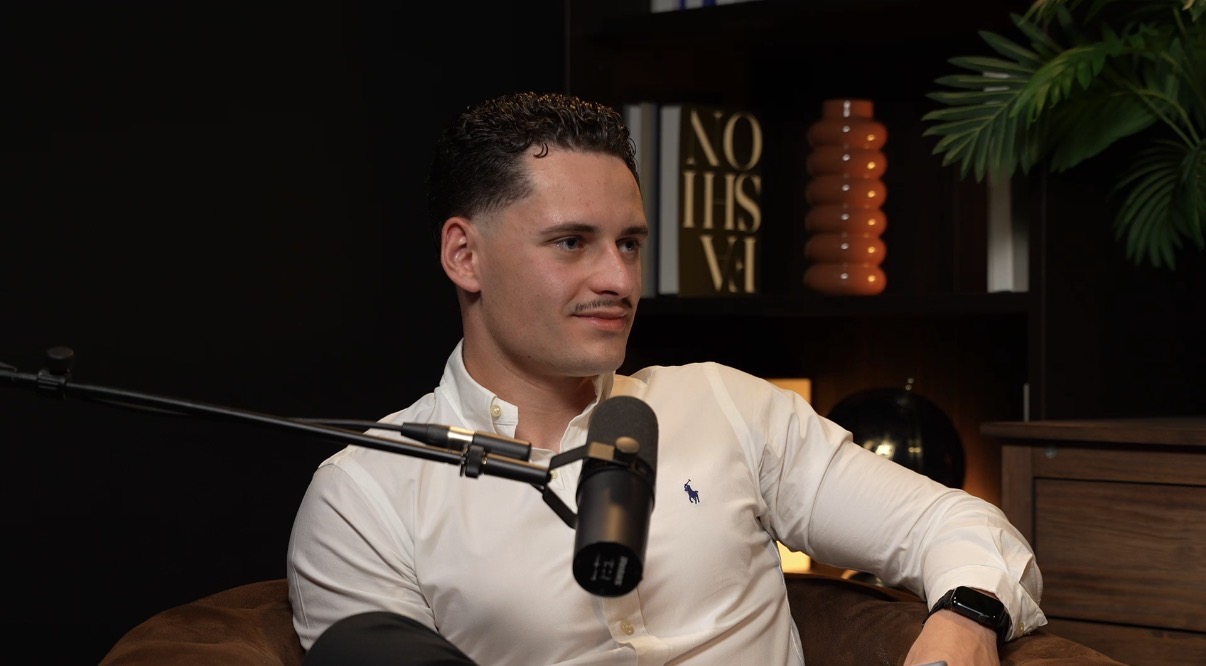
Théo Riondet is the founder of WebScale, a digital architecture firm for private wealth, and the author of the WebScale Barometer. He hosts the Capital Privé podcast. Learn more
The guide on this topic
To never lose another inquiry: the Zero Leak offer, your firm's website, CRM and follow-ups, live in 30 days.
Keep reading
All articles →How many inquiries
are you losing?
Your Zero Leak Score: your website scored out of 100 against over 800 peers, plus the 3 leaks to fix first. Free. No call needed.