
Blog · Dormant database
Dormant database: reactivating a firm's old contacts without putting them off.
In a firm's inbox and address books, hundreds of people have already asked for a meeting, an opinion or some documentation. Almost no one has contacted them again. Reactivating them takes sorting, a message with a real reason to exist, and following a few simple rules.
By Théo Riondet, founder of WebScale · November 20, 2026 · 6 min read
In short
Reactivating old prospects means getting back in touch with people who have already written to the firm, after finding them, removing duplicates and sorting them. The method takes four steps: gather, sort, check what the CNIL, the French data protection authority, allows for each person, then write a short message that gives them a reason to reply. The acquisition cost is zero: these contacts are already within your reach.
01
A dormant database: what exactly is it?
A dormant database is everyone who once showed an interest in your firm and was never contacted again in a consistent way: a form filled out two years ago, a meeting that led nowhere, a contact met at a trade show, a referral that was never followed up.
These contacts are everywhere: the tracking tool when there is one, the inbox, a spreadsheet, business cards, the calendar. No one knows how many there are. That is exactly the problem: what isn't gathered can't be managed.
Their value is simple. These people already know you a little, they took the first step, and contacting them again costs nothing in advertising. The WebScale Barometer shows why this database grows without anyone seeing it: as of November 15, 2026, of 1,857 private wealth websites measured with the 2026-V1.1 methodology, 81%, or more than 8 out of 10, have no way to re-engage a visitor who left without leaving their details. And of the 1,334 websites measured on this criterion, 88% have no form connected to a tracking tool: the inquiry goes to an inbox, then disappears.
02
The four steps of a reactivation.
- 01
Gather
One single file: name, role, company, email, phone, date and source of the first contact, last exchange, what had been asked. Take every source, even badly kept ones.
- 02
Remove duplicates
The same person often appears three times, with three spellings. Merge on the email, then on the name and company.
- 03
Sort
Three groups: warm contacts (a serious exchange, a meeting that took place), lukewarm ones (an inquiry with no follow-up), cold ones (a simple visit). A different message for each group.
- 04
Write
One message per group, short, with a specific reason to reply today. Never the same text for everyone.
To find out where your website lets visitors slip away before they even enter the database, you can request your Zero Leak Score. This preparation takes a few hours the first time. It is what separates a useful follow-up from a mass mailing.
03
What the CNIL requires before you write.
The rule depends on the person you are contacting again. The CNIL sums it up this way: electronic prospecting is allowed, but people must be informed first, and must give prior consent if they are individuals, or be able to opt out if they are professionals.
| Who you are contacting | What the CNIL says | What it changes for you |
|---|---|---|
| An individual (B2C) | Prior consent, through a positive action: a checkbox that isn't pre-checked | If no consent was collected at the start, a prospecting email is off the table |
| A client, for a similar service | A possible exception to consent, if a service was actually provided | A single meeting with no signed engagement isn't enough |
| A professional (B2B) | Legitimate interest is possible if the subject relates to their profession, with notice and a simple right to opt out | A company's executive or partner receives an offer related to their business |
| A generic address (contact@, info@) | Not subject to these principles, since it concerns a legal entity | Nothing automatic: the message must still be tailored |
For everyone, every message must say who is writing and make it simple to refuse further messages. The CNIL recommends collecting the opt-out through a checkbox that is never pre-checked. People have rights of access and correction, which must be answered within one month at most, with some exceptions.
What this table means for a wealth management firm: a large part of the database is made up of individuals. For them, consent is not a formality. If you can't show that it was given, don't send them prospecting emails: offer a call from the advisor, or wait for them to come back on their own. Have your compliance officer approve this choice.
The CNIL also publishes a page on data retention periods: personal data is not kept indefinitely. The retention period for your firm's prospects is set with your compliance officer and recorded in your register. Along the way, a database you sort is also a database from which you can delete what no longer has any reason to be there.
04
A message with a reason to exist.
A reactivation message that says “I'm following up” gets no reply. It gets one when it gives a specific reason, tied to what the person had asked for.
For a warm contact
Recall the exchange and what was left open: “We spoke in March about the transfer of your company. Has the question moved forward? I can offer you 20 minutes this week.”
For a lukewarm contact
Quote the original request, without commenting on it: “You had asked for documentation on retirement planning. Here is an updated overview, and a slot if you'd like to talk about it.”
For a cold contact
Don't push for the meeting. Offer a useful resource, such as one of the firm's guides. The Barometer shows that more than half of websites (54% of 1,841 measured) offer nothing to the visitor who isn't ready yet: a cold contact who receives useful content keeps the firm in mind.
In every case, the message is short, signed with a name, and offers one single action. Replies are handled like any other inquiry: acknowledgment, an owner, a slot. We described the pace and the limits of a follow-up in the article on following up with a wealth management prospect.
05
Measure what the database can bring in.
A simple calculation, to do with your own numbers. The example below is a typical case, not an observed result.
- Contacts gathered: 600.
- After removing duplicates and those you can't contact again: 450.
- Response assumption: 3% reply. 450 × 0.03 = 13.5, or 13 conversations.
- If a third of these conversations lead to a meeting: 13 ÷ 3 ≈ 4 meetings.
The 3% rate is a working assumption, not a promise: yours will depend on how old the database is and on the quality of the message. What matters is the comparison: these four meetings required neither advertising nor finding a new investor. The guide on the profitability of a private wealth firm explains how to read what one more meeting is worth in your own firm.
The Dormant Revenue Diagnostic does this review with you in 30 minutes, using your own numbers. It is free, and reserved for firms with over €50M in AUM or €500K in annual revenue.
06
Frequently asked questions.
How long after the first contact can you still follow up with a prospect?
The CNIL doesn't set a follow-up deadline, but it regulates data retention: personal data is not kept without limit. Set a retention period for prospects with your compliance officer, record it in your register, and only get back in touch within that framework.
Can I email former prospects who are individuals?
For commercial prospecting by email to individuals, the CNIL in principle requires prior consent through a positive action. If no consent can be found, it is better not to send prospecting emails and to go through a call from the advisor, or wait for them to reach out.
Do I need a tracking tool to reactivate a database?
It isn't mandatory, but it is what makes the method sustainable: one single file, the date of the last exchange, each contact's group, and a record of consent or opt-out. Without it, a reactivation happens once, then never again.
What should I do with a contact who replies “don't contact me again”?
Record it in the file that same day and never contact them again for prospecting. The CNIL requires every message to make it simple to refuse further messages, and that refusal to be respected.
Sources
- 1.CNIL, Commercial prospecting by email, SMS-MMS and automated calling, page accessed on November 15, 2026.
- 2.CNIL, Data retention periods, page accessed on November 15, 2026.
- 3.WebScale Private Wealth Barometer, 2026-V1.1 methodology, figures as of November 15, 2026.
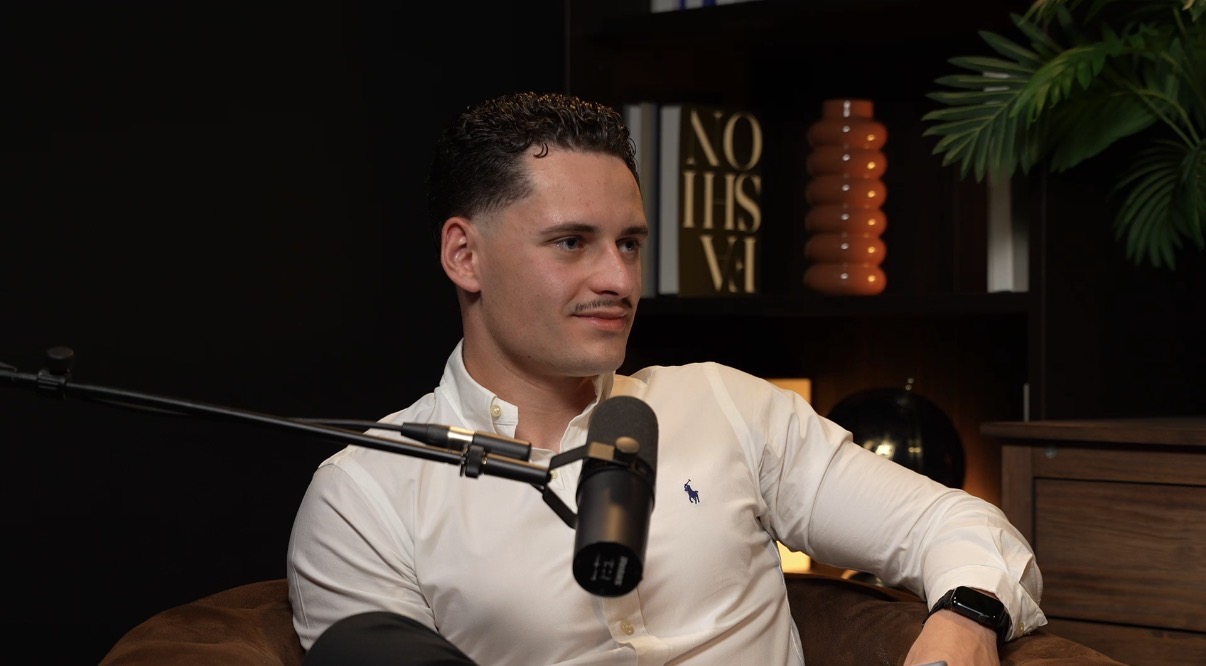
Théo Riondet is the founder of WebScale, a digital architecture firm for private wealth, and the author of the WebScale Barometer. He hosts the Capital Privé podcast. Learn more
The guide on this topic
To never lose another inquiry: the Zero Leak offer, your firm's website, CRM and follow-ups, live in 30 days.
Keep reading
All articles →How many inquiries
are you losing?
Your Zero Leak Score: your website scored out of 100 against over 800 peers, plus the 3 leaks to fix first. Free. No call needed.