
Blog · Client acquisition
LinkedIn for a firm's leader: what brings in inquiries, and what doesn't.
A firm's leader posts every week, gets “likes” from peers, and few investor inquiries. The problem is rarely the post. It lies in what the post triggers, or fails to trigger.
By Théo Riondet, founder of WebScale · November 4, 2026 · 6 min read
In short
LinkedIn brings inquiries to a wealth management firm when four links hold: a profile that says who the firm serves, content that is useful to that person, a simple way in, and a fast reply when the inquiry arrives. One broken link is enough to lose the inquiry. As of October 29, 2026, the WebScale Barometer shows that 46% of the profession's websites don't say who they serve, and 80% cannot re-engage a visitor who left without leaving their details.
01
LinkedIn brings in inquiries when four links hold.
An investor inquiry from LinkedIn is a contact made by someone who saw the leader's profile or a post, then decided to write, call or book a meeting. Between the post and that decision, there is a chain. Each link can break, and no one sees it, since an inquiry that never arrives leaves no trace.
The four links:
- The profile: in ten seconds, a visitor knows who the firm serves and what they can ask it for.
- The content: it answers a question this person is asking, not the one peers are asking.
- The way in: a link, a form or a calendar, one click from the profile.
- The reply: the inquiry arrives somewhere someone sees it and replies quickly.
Most leaders work on the second link, because it is the most visible. Yet the other three decide what the post brings in.
02
A profile that says who you serve.
A firm leader's profile often describes the firm: its values, its track record, its licenses. An investor who lands there is looking for something else: whether this person handles situations like theirs. A business owner who has just sold their company, a senior executive, a family preparing a succession don't recognize themselves in “comprehensive wealth advisory services.”
The same flaw shows up on websites. As of October 29, 2026, of the 1,855 publishable websites in the WebScale Private Wealth Barometer (2,197 websites measured, 2026-V1.1 methodology), 46% don't say who they serve. So more than 4 out of 10 websites leave the visitor guessing whether they are in the right place. A LinkedIn profile that sends people to such a website adds up both flaws.
One sentence is enough to fix it: who you help, at what moment in their life, and how to get in touch.
03
Content that answers the investor's question.
Content that brings in inquiries answers a concrete, timely question: “what to do with the proceeds of a sale,” “how to prepare a succession before retirement.” Content that brings in “likes” talks about the profession to people in the profession.
For a firm, a useful post has three features:
- it addresses a specific situation, named in the very first line;
- it gives a verifiable benchmark, with its source, not an opinion;
- it mentions no product and promises no returns. The profession's rules apply to a post just as they do to a website: have your compliance officer approve your posts.
The test is simple. Reread your last five posts and note, for each one, who could have found in it an answer to a real problem. If the answer is “mostly peers,” you are posting for your peers.
04
A way in one click from the profile.
This is the link most often forgotten. A successful post brings someone to the profile. If the profile offers neither a clear link nor a way to book a meeting, the person leaves, and they leave without leaving their details.
The Barometer measures what the website can do next: as of October 29, 2026, 80% of websites have no way to re-engage a visitor who left without leaving their details. For the LinkedIn post that brought them in, that is the end of the chain: the interested visitor came and went, and the firm will never know. 40% of websites don't even measure their traffic, which makes it impossible to know how many visitors come from LinkedIn.
Three ways in are enough, from simplest to least simple:
| Way in | What it asks of the investor | What it requires of the firm |
|---|---|---|
| A link to a calendar | One click, one slot | A calendar that only opens useful slots |
| A short form | Name, contact details, one sentence about the project | A form connected to a tracking tool, not to an inbox |
| A direct message | Writing to one person | A person who replies within the hour |
The third is the most fragile: a LinkedIn message stays in a single partner's inbox. If that partner is in a meeting or on vacation, the inquiry waits. That is exactly the leak described in the article on the cost of a lost inquiry.
05
The reply decides everything else.
An inquiry that arrives through LinkedIn meets the same fate as all the others: it is handled quickly, or it goes cold. The WebScale Barometer shows that as of October 29, 2026, 88% of websites that can be measured on this criterion (1,333 websites) have no form connected to a tracking tool: a standard form that sends to an inbox, or no form at all. So more than 8 out of 10 websites rely on the memory of whoever reads the inbox.
A typical path, in a case we built as an example: a post about selling a business is read on a Tuesday at 8:10 AM A business owner writes at 8:40 AM from their phone. The partner is in meetings until noon, then traveling. The reply goes out on Thursday. In the meantime, the business owner has written to another firm, which replied on Tuesday.
Nothing about the post was at fault. The chain broke at the fourth link.
06
The rules for reaching out.
Posting on your profile is not solicitation. Writing to someone first may be. Banking and financial solicitation is regulated by the French Monetary and Financial Code: Article L. 341-3, in its version applicable from June 15, 2024 to December 30, 2024, lists financial investment advisors among those who may engage in it, within the limits of the provisions that govern them. The AMF, the French financial markets regulator, sets out the conditions in its guidance DOC-2006-23. The exact conditions depend on your status and on the person contacted: have them approved by your compliance officer before any messaging campaign.
On personal data, the CNIL, the French data protection authority, states that for prospecting professionals by electronic message, no prior consent is required, but the person must be able to opt out, and the subject of the message must relate to their profession. Every message must make it possible to identify the organization sending it, and refusing further messages must be possible by a simple means.
07
Measure what LinkedIn brings in, in 30 days.
- 01
Day one
add a dedicated link to your profile and your posts, so you can recognize visitors who came from LinkedIn.
- 02
For every inquiry
ask “how did you hear about us?” and record the answer in your tracking tool, next to the time it arrived and the time of the first reply.
- 03
Day ten
count the messages received in your LinkedIn inbox and log them in the tool: a message that isn't logged is an inquiry that doesn't exist.
- 04
Day thirty
count, by source, the inquiries received, the meetings booked and the signings. It is the only number that tells you whether LinkedIn is working for you.
For a broader overview of acquisition channels and their leaks, the guide on winning more wealth management clients without prospecting more details the same logic. To see where your own website stands against your peers, request your Zero Leak Score. If your firm has over €50M in AUM or €500K in annual revenue, the Dormant Revenue Diagnostic (30 minutes, free) works out with you what these inquiries represent.
This is what WebScale sets up with Zero Leak: a reply in under 5 minutes and follow-ups all the way to the signature, whatever the way in.
08
Frequently asked questions.
How often do I need to post on LinkedIn to get inquiries?
No posting frequency guarantees inquiries. One useful post a week, addressing a specific situation, is worth more than three general ones. What you measure is the number of inquiries received by source over 30 days, not the number of posts.
Does a LinkedIn direct message count as an inquiry to handle?
Yes. It is an investor inquiry like any other, and it must go into the same tracking tool, with a time of arrival and an owner. As long as it stays in a partner's inbox, no one else can see it or follow up on it.
Can I write first to a business owner on LinkedIn?
That is prospecting, and it is subject to rules: banking and financial solicitation rules for financial products and services, and CNIL rules for personal data. The CNIL requires the message to relate to the person's profession, to identify the sender and to make refusing simple. Have your compliance officer approve your message.
Does the Barometer measure LinkedIn?
No. The Barometer looks at websites from the outside, with the same methodology for everyone: 50 criteria across six dimensions, each backed by dated evidence. It measures what the website does with the visit, not social media presence.
Sources
- 1.WebScale Private Wealth Barometer, 2026-V1.1 methodology, figures as of October 29, 2026 (1,855 publishable websites out of 2,197 measured).
- 2.WebScale Barometer methodology, page accessed on October 31, 2026.
- 3.CNIL, “Commercial prospecting by email”, page accessed on October 31, 2026.
- 4.AMF, Guidance DOC-2006-23, status of financial investment advisor, which sets out the conditions for banking or financial solicitation for an advisory service.
- 5.French Monetary and Financial Code, Article L. 341-3, version applicable from June 15, 2024 to December 30, 2024, accessed on Légifrance. The current version should be checked on Légifrance.
- 6.The Tuesday 8:10 AM path is a typical case built by WebScale, not a real case.
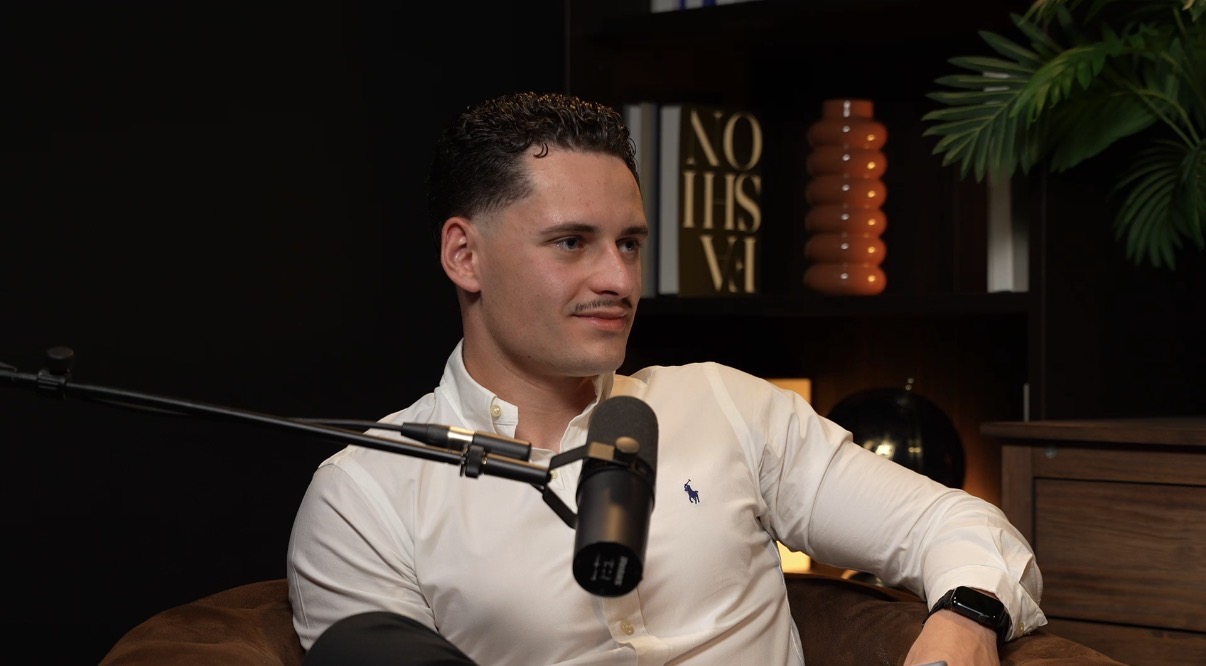
Théo Riondet is the founder of WebScale, a digital architecture firm for private wealth, and the author of the WebScale Barometer. He hosts the Capital Privé podcast. Learn more
The guide on this topic
To never lose another inquiry: the Zero Leak offer, your firm's website, CRM and follow-ups, live in 30 days.
Keep reading
All articles →How many inquiries
are you losing?
Your Zero Leak Score: your website scored out of 100 against over 800 peers, plus the 3 leaks to fix first. Free. No call needed.